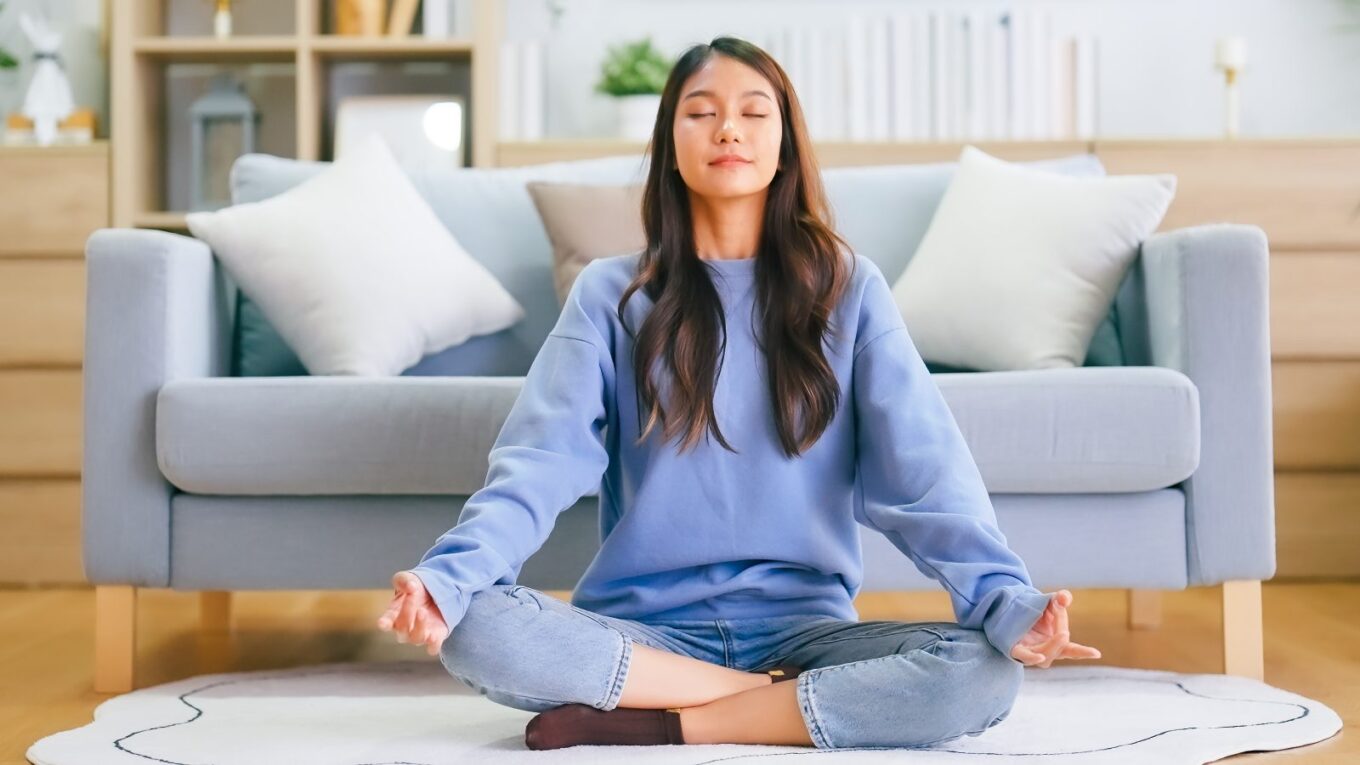
6 cross-legged yoga poses to reap benefits of sitting on the floor
Try these 6 cross-legged yoga poses to reap the benefits of sitting on the floor. It quietly supports digestion, posture, flexibility, and mental calm.
Sitting cross-legged on the floor may seem old-fashioned, but it is a posture the human body has relied on for centuries. From eating meals to meditating or resting, floor sitting was once a natural part of daily life. Today, long hours on chairs and sofas have slowly replaced it, increasing the risk of stiffness, poor posture, and reduced flexibility.
When you sit cross-legged, your body naturally engages muscles that often stay inactive while chair sitting. The spine lengthens, the hips open, and the mind settles. This posture also encourages slower movements and better awareness, whether you are eating, breathing, or simply sitting still. In fact, it can also improve digestion, blood circulation, flexibility, and your overall health.
6 cross-legged yoga poses to practice on the floor
Here are 6 cross-legged yoga poses to practice every day to reap their health benefits:
1. Easy pose (Sukhasana)
It calms the mind, improves posture, and supports gentle hip opening. How to perform:
- Sit with legs crossed comfortably.
- Keep your spine straight and your shoulders relaxed.
- Rest your hands on your knees.
- Close your eyes and breathe deeply.
- Hold for 1–3 minutes.
2. Lotus pose (Padmasana)
It enhances focus, flexibility, and spinal alignment. How to perform:
- Sit with legs extended.
- Place one foot on the opposite thigh.
- Bring the other foot onto the opposite thigh.
- Keep spine upright.
- Breathe calmly.
3. Bound angle pose (Baddha Konasana)
It stretches the hips and improves blood flow to the pelvic region. How to perform:
- Sit with the soles of your feet together.
- Hold feet with hands.
- Sit tall and relax your knees downward.
- Breathe steadily.
- Hold for 30–60 seconds.
4. Cow-face pose (Gomukhasana)
It stretches the hips, thighs and improves joint mobility. How to perform:
- Stack knees over each other.
- Sit evenly on your hips.
- Keep your spine straight.
- Relax shoulders.
- Hold and switch sides.
5. Half lotus pose (Ardha Padmasana)
It builds flexibility gradually and improves posture. How to perform:
- Place one foot on the opposite thigh.
- Keep the other leg folded below.
- Sit upright.
- Relax shoulders.
- Hold for a few breaths.

6. Eagle pose (Garudasana – seated variation)
It improves balance, focus, and joint flexibility. How to perform:
- Sit cross-legged.
- Wrap one arm under the other.
- Lift elbows gently.
- Sit tall and breathe.
- Switch arms.
Benefits of sitting cross-legged on the floor
Here are 7 reasons why you should try sitting cross-legged on the floor:
1. Supports mindful eating and weight control
Sitting on the floor while eating encourages slower, more attentive meals. This posture helps the vagus nerve send signals from the stomach to the brain, making it easier to recognise fullness. Eating slowly often prevents overeating and supports healthier weight management.
You may also like


2. Improves blood circulation
In a cross-legged position, blood flow is redistributed more efficiently through the heart to vital organs, supporting digestion and internal functions. Unlike chair sitting, where blood pools in the feet, this posture promotes better overall circulation.
3. Promotes better digestion
Bending slightly forward while eating and returning upright stimulates digestive juices. Sitting cross-legged signals the brain to prepare the digestive system, helping food break down more smoothly.
4. Naturally improves posture
Floor sitting encourages a straight spine, stretches the chest, and relaxes the shoulders. This alignment reduces strain on the neck, back, knees, and joints, helping ease everyday aches caused by slouching.
5. Increases flexibility and joint strength
Regular floor sitting gently stretches the hips, knees, ankles, and spine. These small but consistent movements help improve flexibility and support core strength and mobility.
6. May support longevity
A study published in the European Journal of Preventive Cardiology found that people who could sit on the floor and stand up without support had a lower risk of mortality.
7. Calms the mind and improves focus
Cross-legged sitting naturally promotes mental stillness. It is commonly used for meditation because it improves focus, reduces stress, and enhances oxygen flow throughout the body.