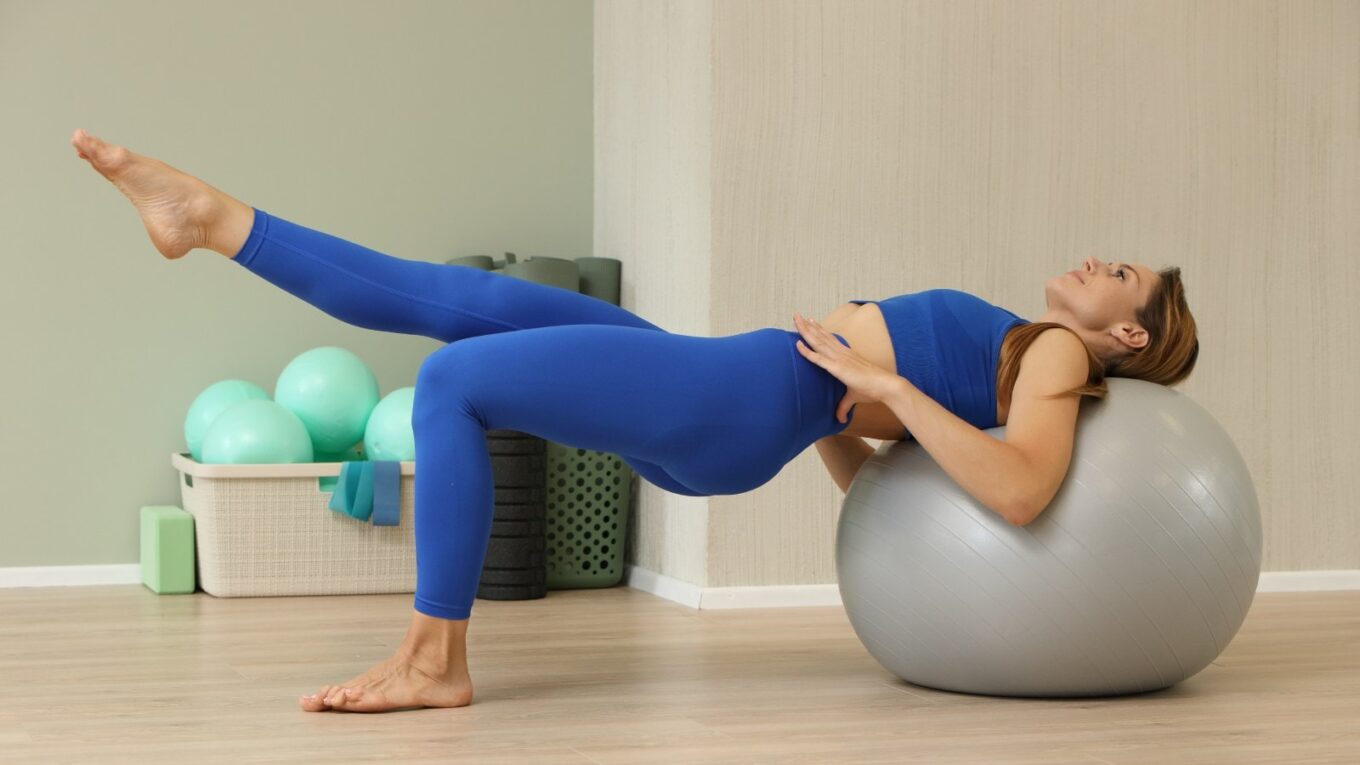
Pilates ball exercises for core strength and better posture
Have you ever tried a Pilates ball? This simple equipment can activate deep core muscles, support spine health and boost strength.
Pilates is known for its gentle yet effective approach to building strength, flexibility, and balance. Over the years, it has become a go-to workout for people who want results without putting excess stress on their joints. One simple tool that takes Pilates to the next level is the Pilates ball. Small, lightweight, and easy to use, this ball introduces controlled instability into your workout. That slight wobble is what makes it so effective. It forces your body to work smarter, not harder.
According to fitness expert Mukul Nagpaul, Pilates ball exercises are especially useful for activating deep core muscles that often stay underworked in regular floor exercises. Whether your goal is better posture, a stronger core, or improved spine health, Pilates ball exercises fit easily into most fitness routines.
Why are Pilates ball exercises effective for core strength?
The key benefit of Pilates ball exercises lies in instability. When your body is placed on an unstable surface, your muscles have to make constant micro-adjustments to stay balanced. Nagpaul explains that this process activates deep core muscles like the transverse abdominis, which acts like a natural support belt for your spine. Unlike traditional crunches that mainly target surface muscles, Pilates ball movements train your core to support everyday actions such as walking, bending, and lifting.
A study published in BioMedicine found that instability-based core exercises significantly improve muscle activation and balance compared to stable floor workouts. This makes Pilates ball training especially useful for functional strength.
Benefits of Pilates ball exercises for back and spine health
Pilates ball exercises are particularly beneficial for the back and spine. Movements like ball bridges and back extensions strengthen the muscles that support the spine while encouraging proper alignment. This can reduce stiffness and ease discomfort caused by prolonged sitting or poor posture.
According to fitness expert Mukul Nagpaul, regular practice helps build a strong support system around the spine, reducing strain on the lower back. Controlled movements also improve spinal mobility, which is essential for long-term back health and injury prevention.
How do Pilates ball exercises improve posture and balance?
Poor posture is often the result of weak core and back muscles. Pilates ball exercises address this by training your body to stay aligned even when balance is challenged. As your core gets stronger, your shoulders naturally pull back and your spine stays more upright.
Exercises like Russian twists and planks with feet on the ball improve coordination and body awareness. Over time, this translates into better posture not just during workouts, but also while sitting, standing, and walking throughout the day.

Beginner-friendly Pilates ball exercises to try
If you are new to Pilates ball workouts, start slow and focus on control and breathing. These beginner-friendly exercises help activate your core without putting too much strain on the body. Nagpaul recommends 8–12 reps for each move, performed with steady, controlled breathing.
1. Ball bridge: Lie on your back with your feet on the ball. Engage your core and lift your hips, squeezing your glutes. Lower down slowly.
2. Inner thigh squeeze: Lie on your back and place the ball between your knees. Gently squeeze the ball, hold for a few seconds, then release.
You may also like


3. Bird-dog with ball: On all fours, place the ball under one hand. Extend the opposite arm and leg while keeping your core tight.
4. Ball sit-ups: Sit on the ball, walk your feet forward, and rest your lower back on it. Curl up slowly and return with control.
5. Ball roll-out: Kneel with your hands on the ball. Roll it forward slightly, engage your abs, then pull it back in.
Who should be cautious with Pilates ball exercises
While Pilates ball exercises are generally safe, they may not be suitable for everyone. People with recent injuries, severe spinal conditions, balance disorders, or those in advanced stages of pregnancy should consult a healthcare professional before starting. The instability of the ball can increase the risk of strain if exercises are done incorrectly.